






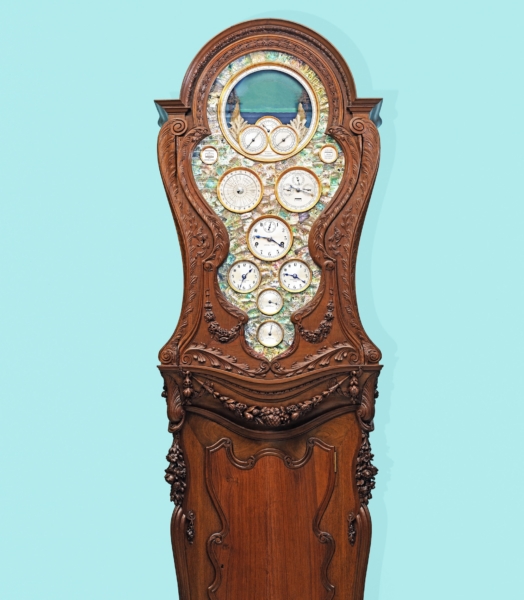
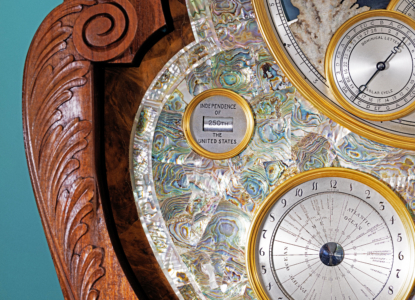
In honor of the 250th anniversary of the signing of the Declaration of Independence of the United States, Tiffany & Co. is proud to unveil the historic Astronomical Clock, made by the House for the 1893 World’s Columbian Exposition in Chicago. The clock movement incorporates 21 complications, mostly astronomical; several complications are rarely seen in modern horology, and one is unique: a display of the number of years elapsed since the United States of America gained independence. In 2026, the clock will display “250th,” marking this historic anniversary.
Acquired by Tiffany & Co. in 2025, the clock has been meticulously restored over a span of seven months in Tiffany & Co.’s watchmaking workshops in Geneva, with scrupulous attention paid to both aesthetic beauty and immaculate mechanical operation. Following its unveiling on July 3, 2026, the Astronomical Clock will be displayed at The Landmark, Tiffany & Co.’s flagship store at 727 Fifth Avenue in New York City, where it will be on view to the public.
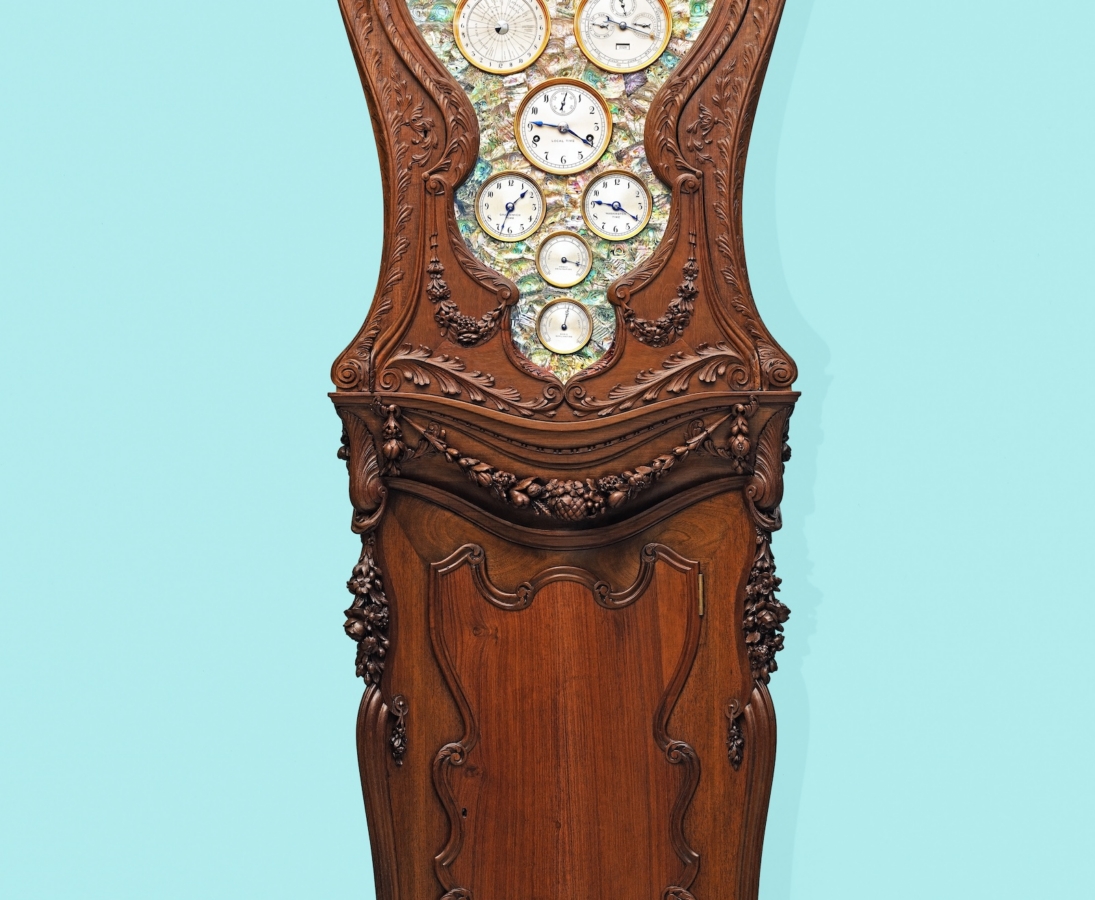
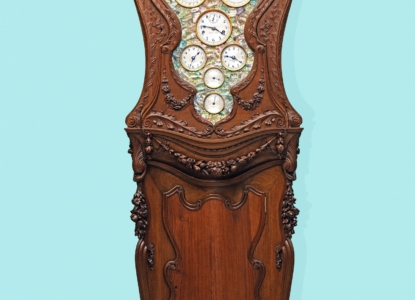
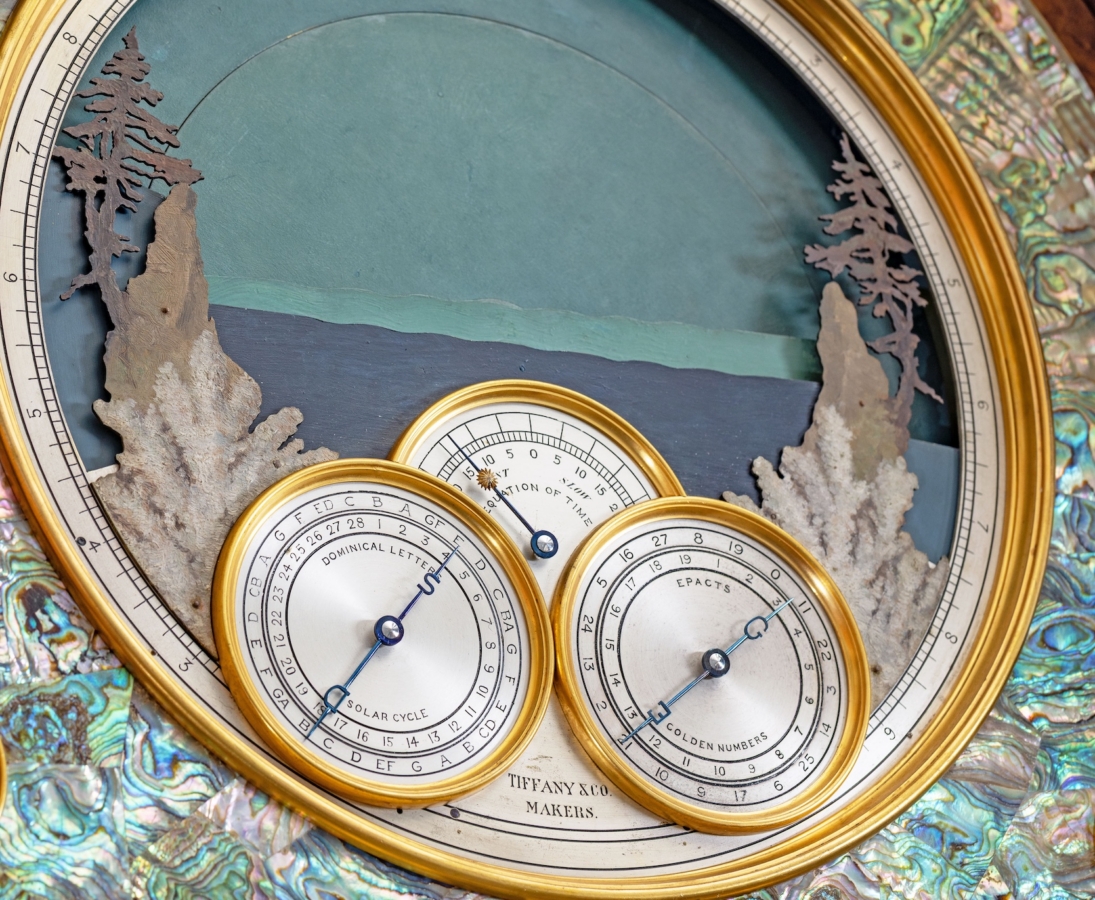
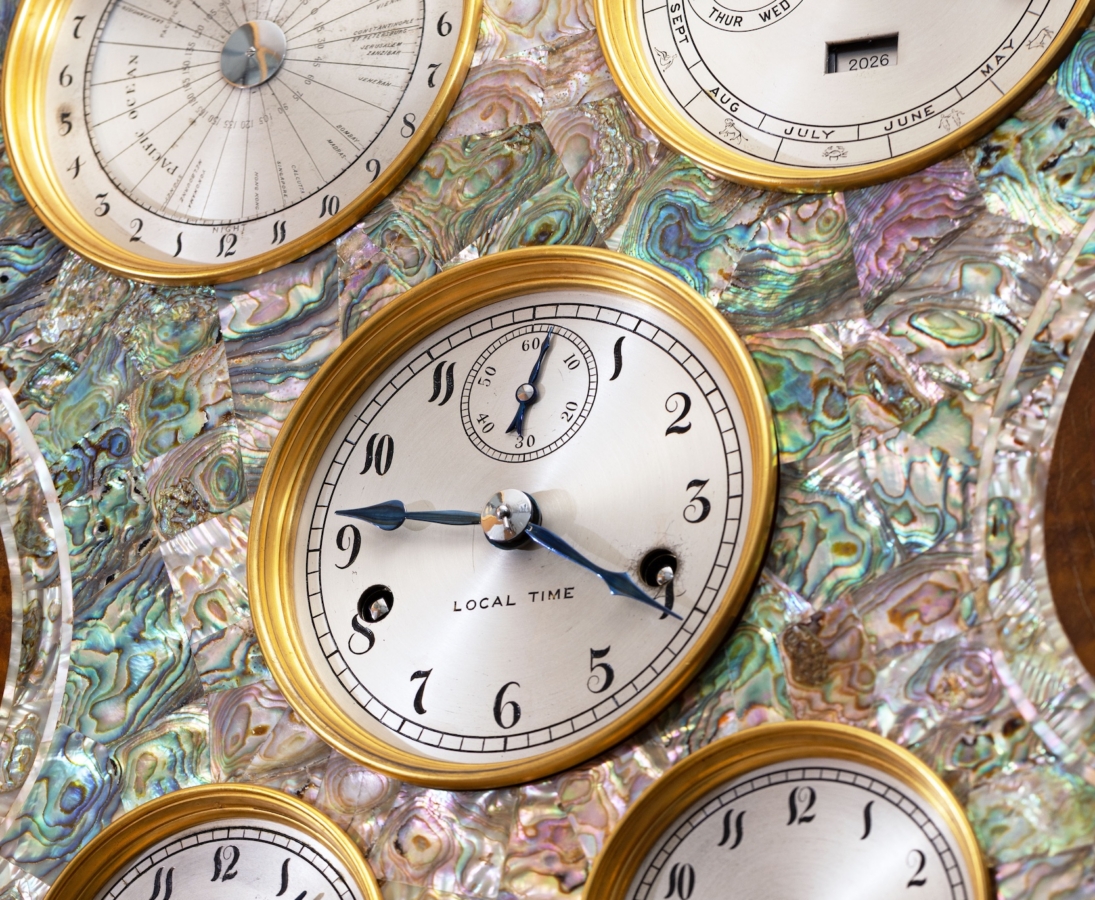
Designed in the style of Louis XV, the clock case stands eight feet (almost 2.5 meters) in height and features elegant floral carving and marquetry. On the front, 13 silver and painted dials with gilt rims are set within a frame inlaid with a Californian mother-of-pearl. The clock was crafted under the direction of Joseph Lindauer, Master Clock Maker, Tiffany & Co., on the fourth floor of its Union Square store. It took Tiffany artisans over two years to complete this horological masterwork.
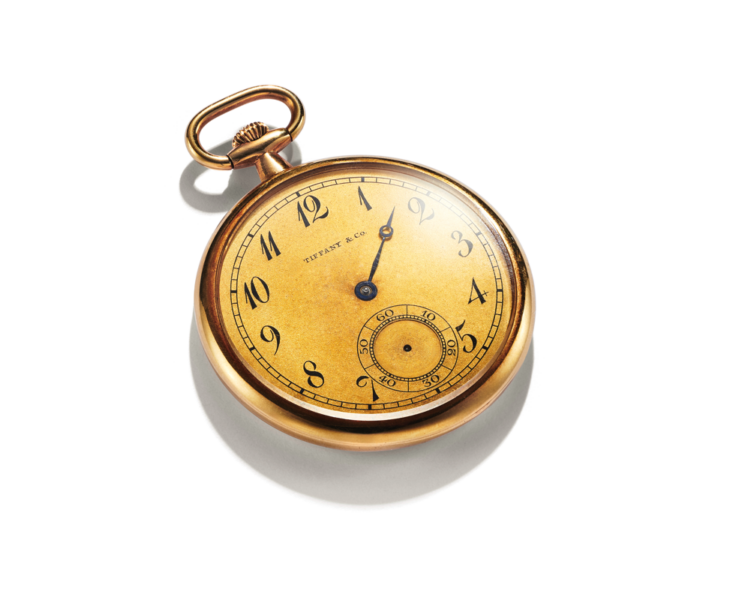
Tiffany & Co.’s horological legacy dates to 1847, when the House began to retail watches and clocks. After opening an office and watch assembly workshop in Geneva in 1868, Tiffany & Co. established a manufacture in the heart of the city in 1874. On both sides of the Atlantic, its watchmakers and clockmakers demonstrated genuine technical and horological expertise, developing and patenting various mechanical innovations underscoring a commitment to design and craftsmanship as well as technical advances.
The restoration of the Astronomical Clock and its presentation to coincide with the 250th Anniversary of the signing of the Declaration of Independence of the United States. This endeavor highlights Tiffany & Co.’s contribution to horology and its legacy of exceptional craft. As the custodian of this unique heritage, Tiffany & Co. plays an important role in preserving and celebrating history, through precious objects that honor their origins and resonate with collectors and historians alike.
The Astronomical Clock is remarkable in consisting of 21 complications that track the complex interaction of celestial bodies in a single clock. These functions measure and display time in multiple ways—from the civil time we follow through 365-day calendars and 24-hour days to the direct tracking of astronomical phenomena.
Technical Information:
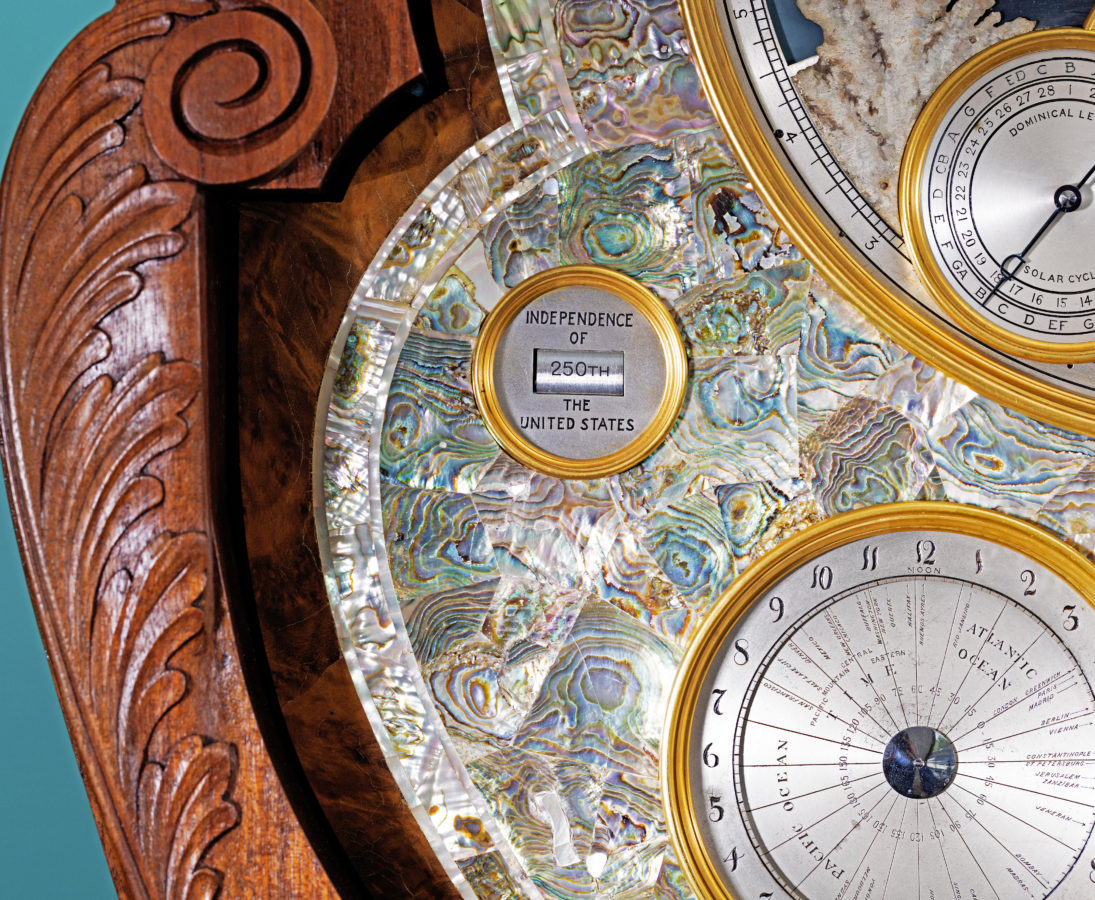
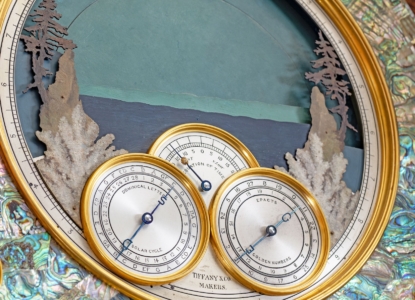
On the front, 13 silver and painted dials with gilt rims are set within a frame inlaid with a Californian mother-of-pearl. On the upper dial, the sun and moon are shown in their apparent positions, with the sky in the background. Below these, in a line of the horizon, is a representation of the sea, indicating the tides at all hours. Two other dials follow; the right one is a perpetual calendar, showing the signs of the zodiac, the month, date of the month, date of week, leap year, and Anno Domini. The other one on the left is a disc divided into 24 parts (Meridian) and degrees from Greenwich. There are also 31 of the principal cities of the world marked on this dial, while another revolving plate indicates the hour of the day or night at each place.
Complications:
- Westminster Carillon (not visible on the front of the clock): chimes the hours and quarters in passing.
Civil Timekeeping Dials:
- Perpetual Calendar: Displays the day of the week, date, and months of varying lengths, as well as the year, including leap years; also indicates the signs of the zodiac
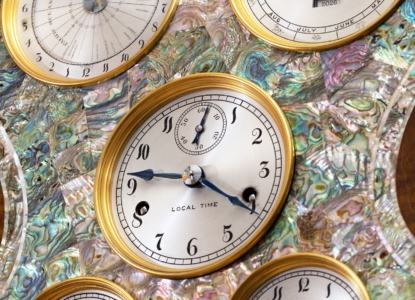
- Hours and Minutes: Local time, Greenwich Mean time, Washington, D.C. time
- World time: local time in 31 cities around the world, displayed simultaneously
Sun & Moon Indicators:
- Apparent position of the Sun.
- Sunrise time
- Sunset time
- Apparent position of the Moon.
- Phases of the Moon.
- Tides (represented by the horizon line located above the sea).
Historical Indicators:
- U.S. Independence: the number of years elapsed since 1776.
- Julian Period: a rare astronomical display providing a continuous count of years, introduced in 1583 to simplify the calculation of long-term celestial cycles.
Astronomical Indicators:
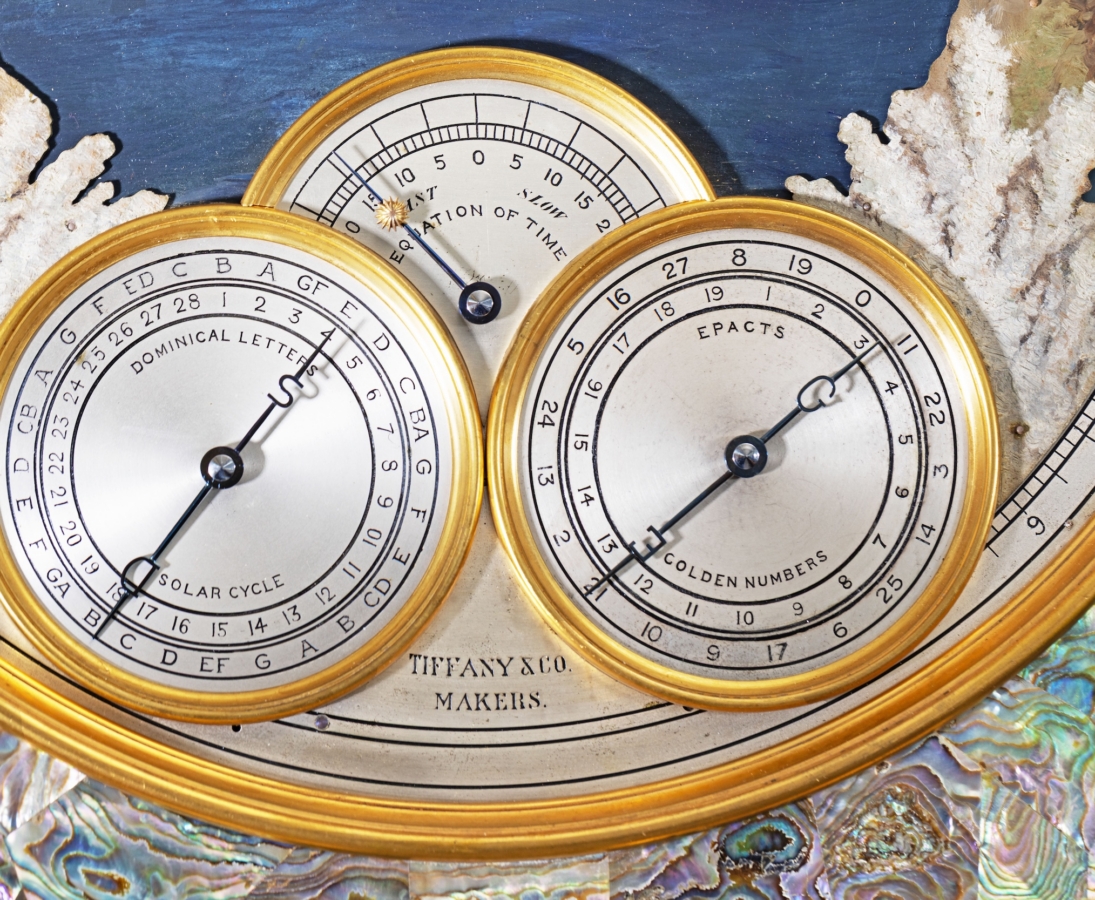
- Equation of Time: The differences between the 24-hour civil day and real, solar time.
- The Solar Cycle: Positions the year within a 28-year cycle, used to determine the distribution of weekdays.
- Declination of the Sun: The angles between the rays of the Sun and the plane of Earth’s equator; it varies throughout the year due to Earth’s axial tilt, from its maximum at the summer solstice to minimum at the winter solstice.
- Declination of the Moon: The position of the Moon relative to the celestial equator, it varies due to the Moon’s inclined orbit, affecting how high the Moon appears in the sky.
- Golden Numbers: A sequence of numbers used in calendars to indicate the dates of new moons within the 19-year Metonic cycle.
- Epacts: The age of the ecclesiastical moon on 1 January, used principally in determining the date of Easter. The epact varies from year to year because of the difference duration of the solar year and lunar years.
- Dominical Letter: A rare complication used to determine the day of the week for particular dates and indirectly facilitating the construction of the ecclesiastical calendar for any year.
The last three complications are extraordinary and even more unique in combination: using the solar cycle, dominical letters, and the epact (derived from the golden number) determines the ecclesiastical full moon after the spring equinox. Easter is then set as the first Sunday following that full moon.
About Tiffany & Co.
Tiffany & Co., founded in New York City in 1837 by Charles Lewis Tiffany, is a global luxury jeweler synonymous with elegance, innovative design, fine craftsmanship and creative excellence.
With more than 300 retail stores worldwide and a workforce of more than 14,000 employees, Tiffany & Co. and its subsidiaries design, manufacture and market jewelry, watches and luxury accessories. Over 3,000 skilled artisans cut Tiffany diamonds and craft jewelry in the Company’s own workshops, realizing the brand’s commitment to superlative quality.
Tiffany & Co. has a long-standing commitment to conducting its business responsibly, sustaining the natural environment, prioritizing diversity, equity and inclusion, and positively impacting the communities in which it operates. To learn more about Tiffany & Co. and its commitment to sustainability, please visit tiffany.com.
@tiffanyandco #TiffanyWatch


 Continue Browsing